

 Get started
 How-to guides
 Reference
 Concepts
 Self-host gallery
 Appendix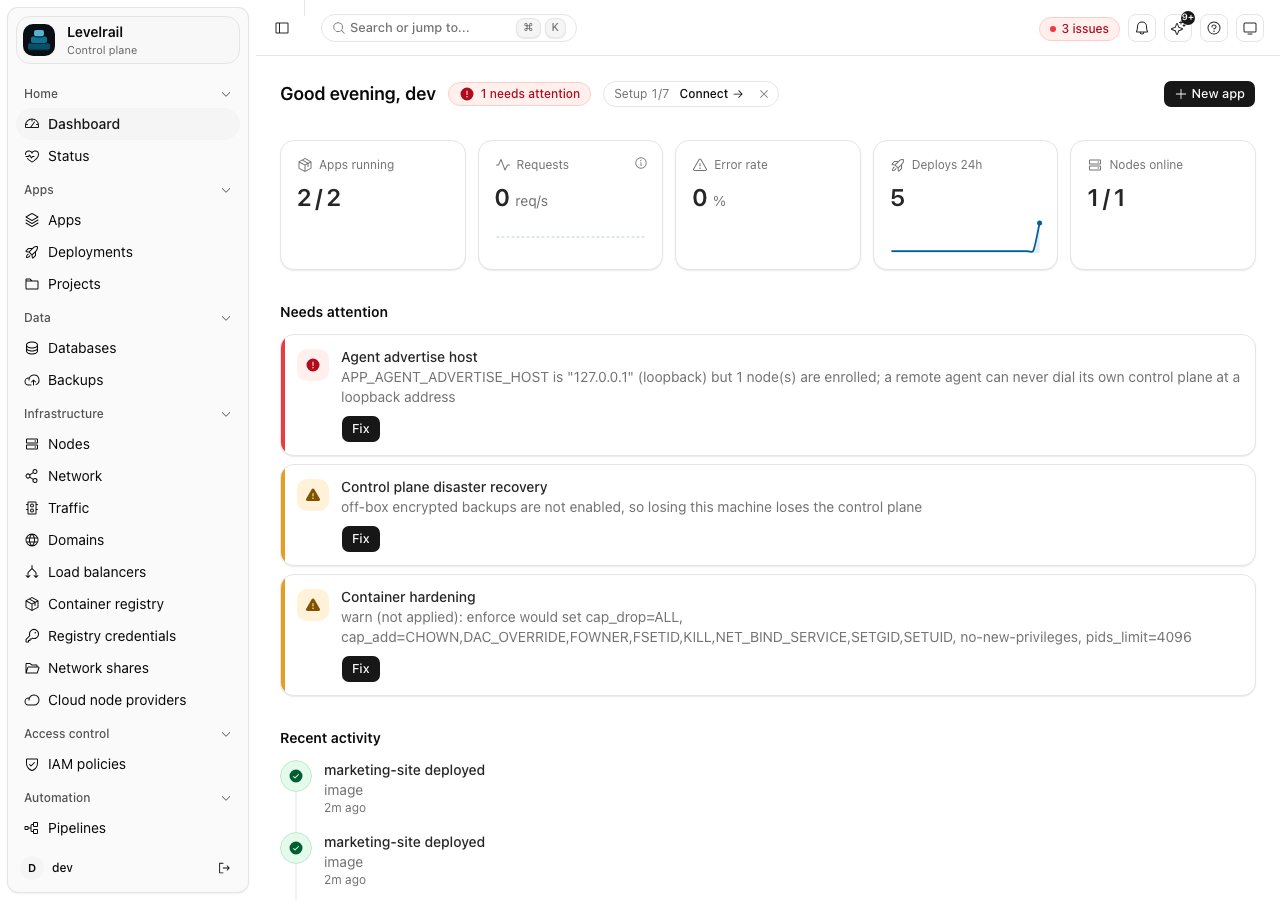
Install and first deploy
The install script checks the host, installs Docker if it is missing and starts the control plane as a systemd service. Then you deploy.install, deploy
What to try first
1
Install and open the dashboard
Run the install script, then sign in with the setup token it prints.
2
Deploy something small
Connect a repo or point at an image and watch the build and the readiness gate.
3
Break it on purpose
Deploy a failing version, see the crashloop detection with the last log lines, then roll back.
A tour of the dashboard
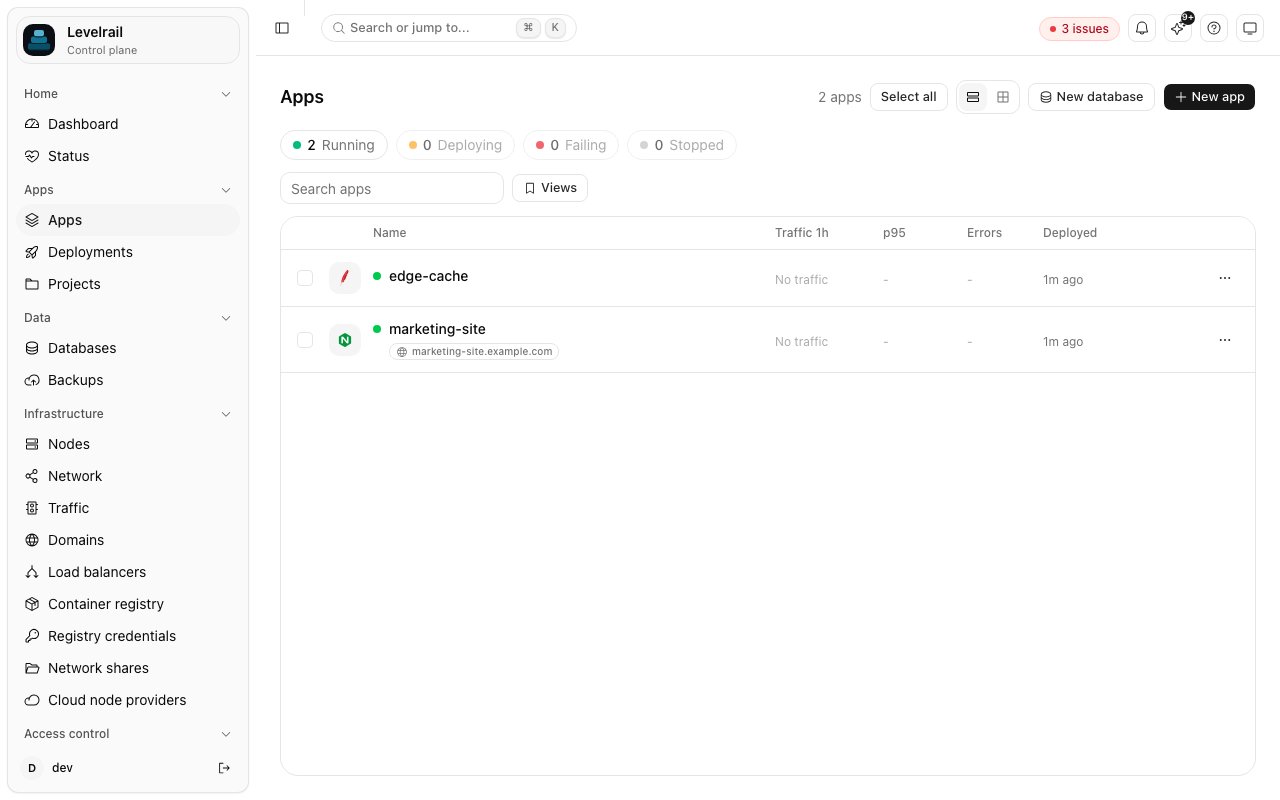
Every app across every node, with status at a glance.

Deploy history with one-click rollback to a pinned image.
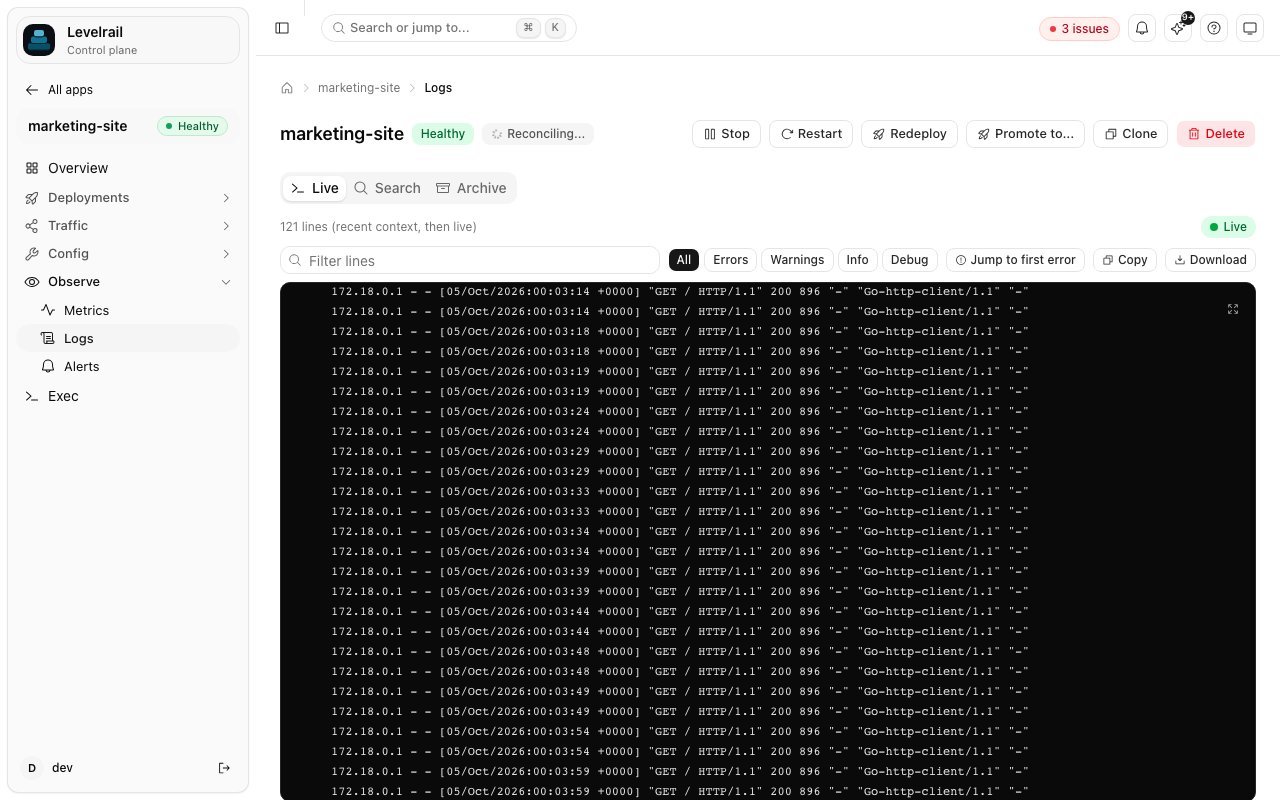
Live log tail with full-text search.
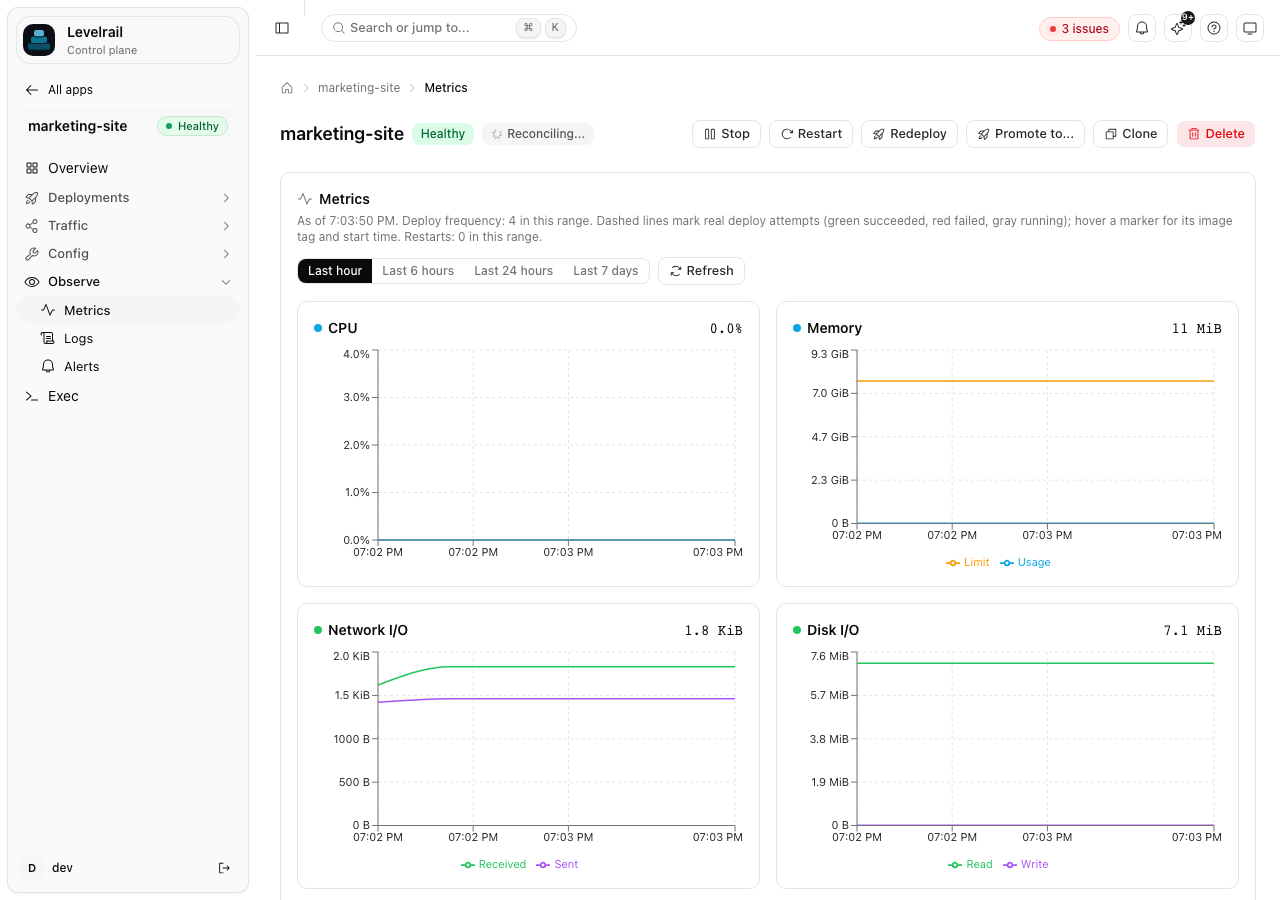
Metrics with deploy markers overlaid on the charts.
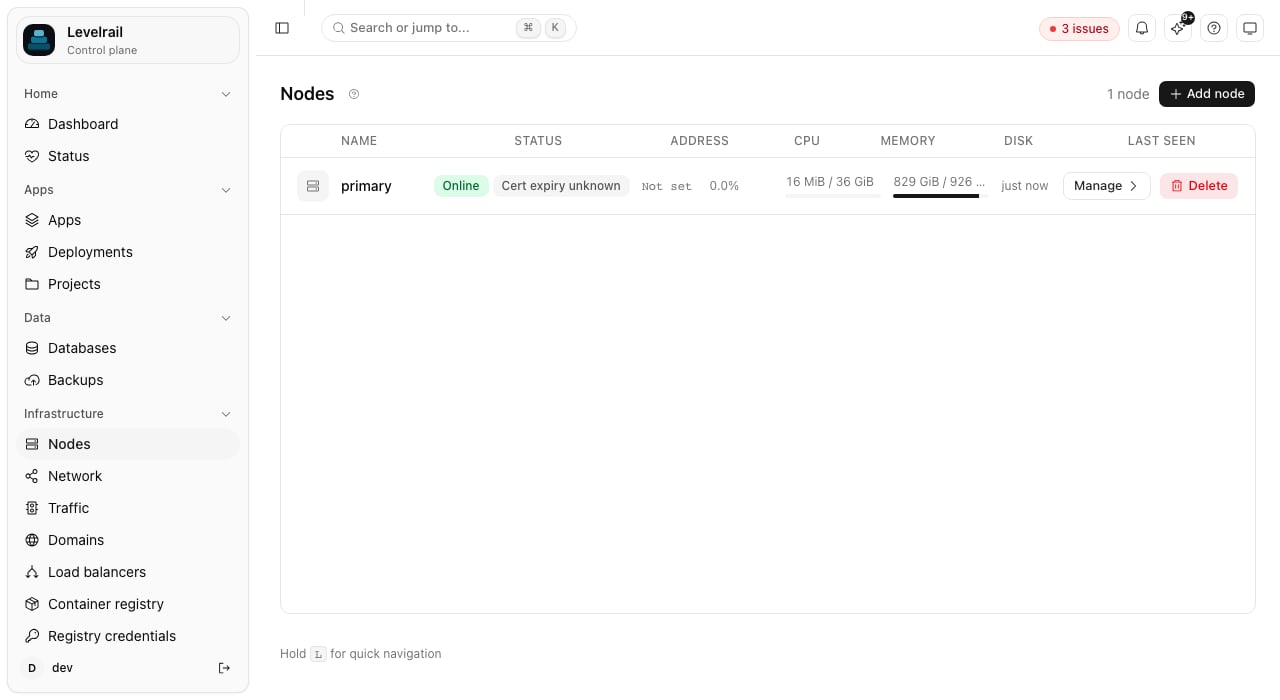
Nodes, their health and what is placed on them.
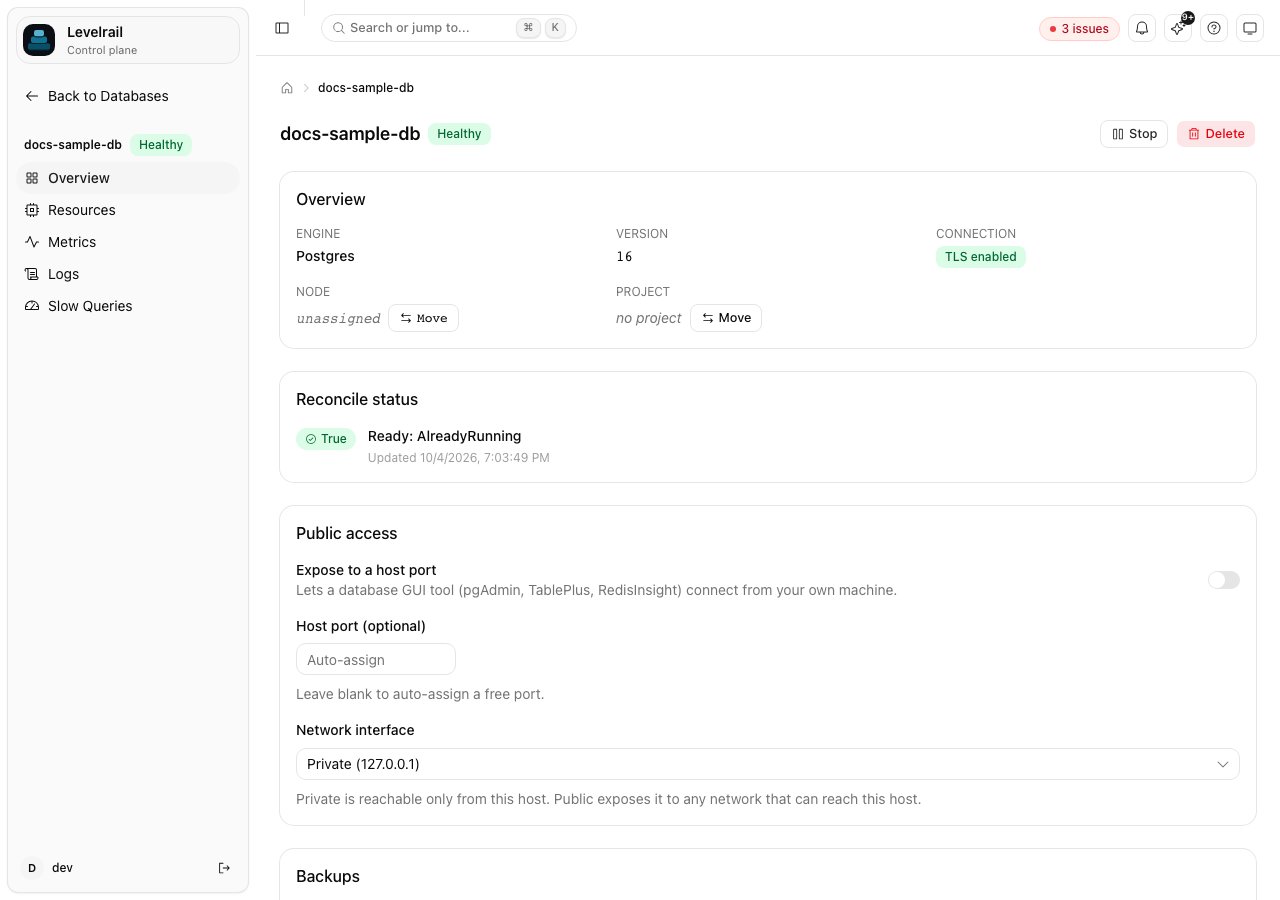
Managed databases with backups and verification.
Frequently asked questions
Is there a hosted demo?
Is there a hosted demo?
No. Levelrail is self-hosted, so the quickest demo is the install script on any Linux box. The screenshots here are from a real dashboard.
How long does the install take?
How long does the install take?
The install script handles the host check, Docker and the systemd service in one run. Most of the time is Docker pulling images on a fresh server.
Can I try it without touching my current setup?
Can I try it without touching my current setup?
Yes. Install on a spare server. If you use the importer, it is read-only against your existing platform.